

+918048036466

Currently it only shows your basic business info. Start adding relevant business details such as description, images and products or services to gain your customers attention by using Boost 360 android app / iOS App / web portal.

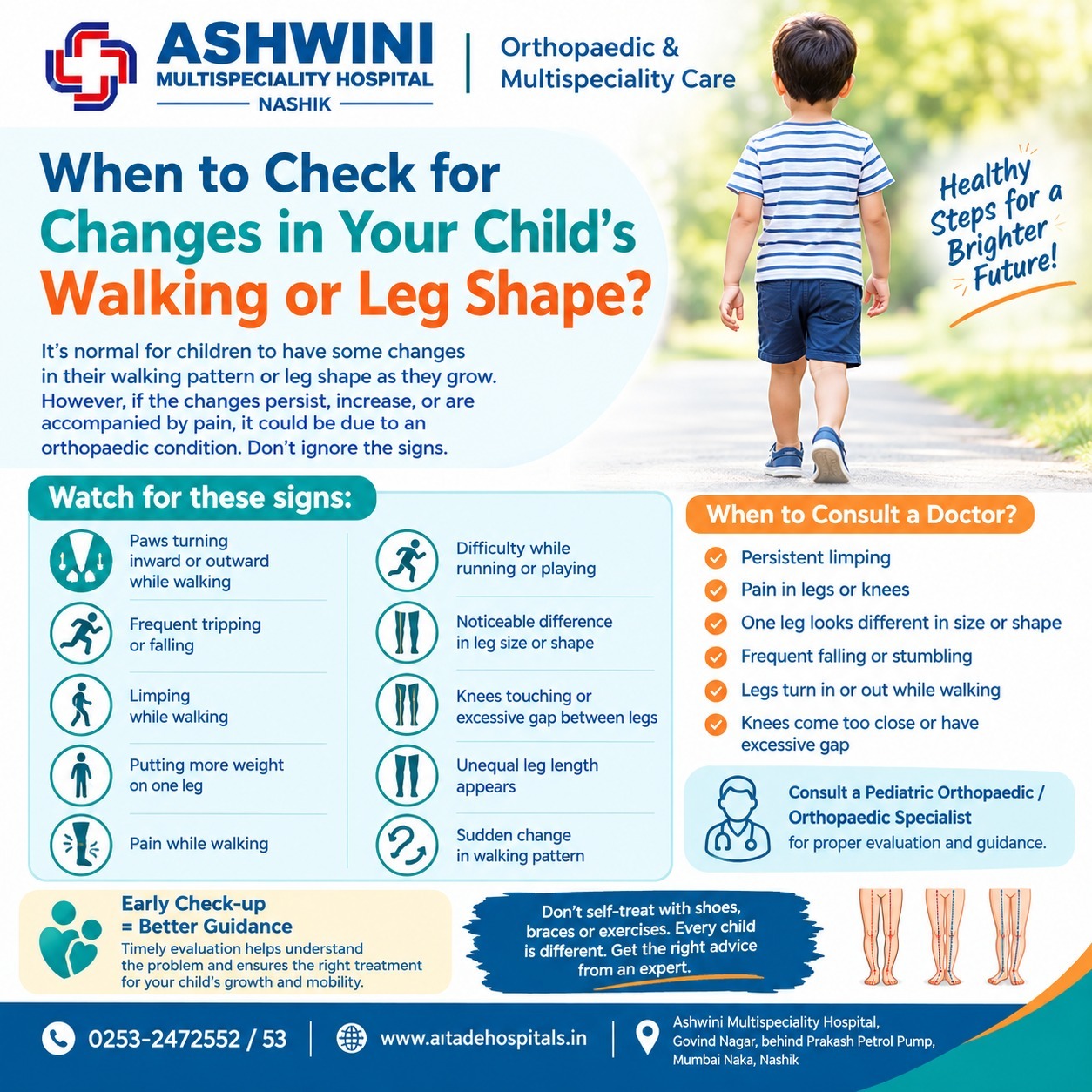
As children grow, some changes in their walking pattern, leg shape, or knee alignment can be normal. In young children, slightly bowed legs, changes in walking style, or feet turning inward or outward may occur as part of normal growth. However, sometimes these changes may be related to bone development, joint problems, unequal leg length, or other orthopaedic conditions. Parents should therefore pay attention to certain warning signs. What Changes in Walking Should Parents Watch For? Look for: - Feet turning inward or outward while walking - Frequent tripping or falling - Limping while walking - Putting more weight on one leg - Pain while walking - Difficulty running or playing - Noticeable difference between the two legs - Knees touching each other or excessive gap between the legs - One leg appearing shorter than the other - Sudden change in walking pattern Is a Change in Leg Shape Always Serious? No. During childhood growth, natural changes in leg and knee alignment can occur. Not every difference in leg shape or walking pattern requires treatment. However, if the problem persists, becomes more noticeable with age, affects only one side, or is associated with pain or limping, an orthopaedic evaluation is advisable. When Should You Consult a Doctor? Consider consulting a Pediatric Orthopaedic / Orthopaedic Doctor if your child has: 1. Persistent Limping If the child frequently or continuously walks with a limp, the underlying cause should be evaluated. 2. Leg or Knee Pain Pain while walking, running, or playing should not be ignored. 3. One Leg Looks Different A noticeable difference in the alignment or shape of one leg compared with the other should be checked. 4. Frequent Falls or Tripping If the child frequently falls or has difficulty with age-appropriate movements, medical evaluation may be helpful. 5. Feet Turning Excessively Inward or Outward A clearly unusual foot position while walking may require orthopaedic assessment. 6. Noticeable Knee Alignment Changes If the knees come too close together or there is an excessive gap between the legs, especially if the change is increasing, consult a doctor. What Happens During an Evaluation? The doctor may assess the child’s walking pattern, leg alignment, knees, hips, and range of movement. Depending on the findings, an X-ray or other investigations may be recommended. Whether treatment or simple observation is needed depends on the child’s age, growth pattern, symptoms, and leg alignment. What Should Parents Do? If you notice changes in your child’s walking or leg shape, do not start special shoes, braces, or exercises without medical advice. Every child develops differently, and proper evaluation can help determine whether the change is part of normal growth or needs attention. Early Check-Up = Better Guidance If your child has persistent changes in walking, pain, limping, frequent falls, or noticeable differences between the legs, seek timely orthopaedic advice. ASHWINI MULTISPECIALITY HOSPITAL, NASHIK Orthopaedic & Multispeciality Care 📞 0253-2472552 / 53 🌐 www.autadehospitals.in


