

+918048036466

Currently it only shows your basic business info. Start adding relevant business details such as description, images and products or services to gain your customers attention by using Boost 360 android app / iOS App / web portal.

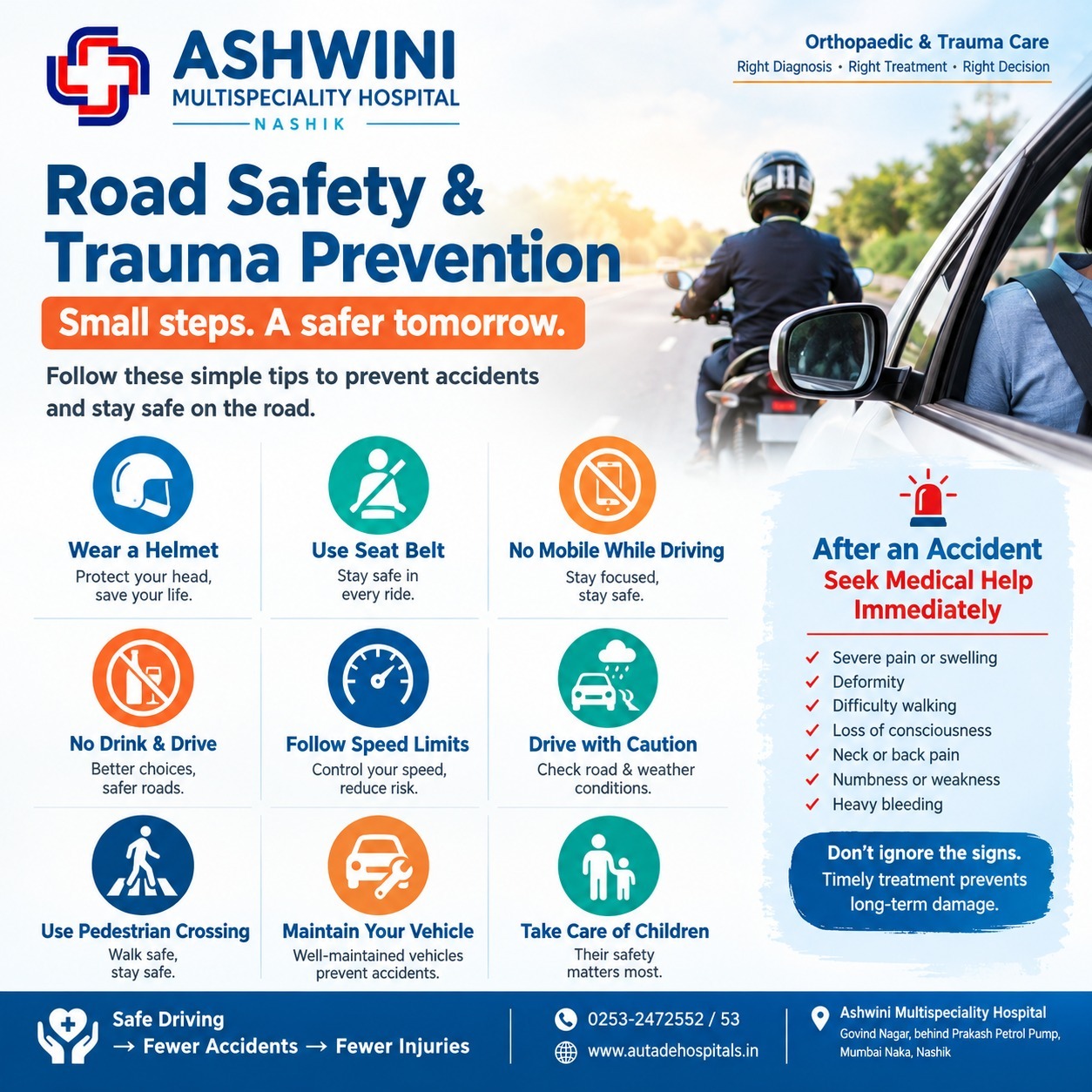
Road traffic accidents are a major cause of injuries such as fractures, head injuries, spinal injuries, ligament injuries, and other forms of trauma. Many road accidents can be prevented by following traffic rules, driving responsibly, and using appropriate safety equipment. At Ashwini Multispeciality Hospital, Nashik, timely evaluation, accurate diagnosis, and appropriate treatment are important for patients who suffer orthopaedic and trauma-related injuries following accidents. 1. Always Wear a Helmet While Riding a Two-Wheeler Wearing a properly fitted helmet can help reduce the risk of serious head injuries. Always wear a good-quality, properly fitted helmet. Fasten the chin strap c… [4:51 pm, 25/9/2026] lychavan1990: Road Safety & Trauma Prevention – Important Tips to Prevent Accidents Road traffic accidents are a major cause of injuries such as fractures, head injuries, spinal injuries, ligament injuries, and other forms of trauma. Many road accidents can be prevented by following traffic rules, driving responsibly, and using appropriate safety equipment. At Ashwini Multispeciality Hospital, Nashik, timely evaluation, accurate diagnosis, and appropriate treatment are important for patients who suffer orthopaedic and trauma-related injuries following accidents. 1. Always Wear a Helmet While Riding a Two-Wheeler Wearing a properly fitted helmet can help reduce the risk of serious head injuries. Always wear a good-quality, properly fitted helmet. Fasten the chin strap correctly. The pillion rider should also wear a helmet. Replace a helmet after a major impact or if it is damaged. Never assume that wearing a helmet makes speeding or unsafe riding safe. 2. Always Wear a Seat Belt in a Car Seat belts are one of the most important safety measures in a vehicle. The driver should always wear a seat belt. Passengers should use available seat belts. Children should be secured using an age- and size-appropriate child restraint or car seat. Avoid travelling without proper safety restraints. 3. Do Not Use Your Mobile Phone While Driving Using a mobile phone while driving can distract the driver and reduce attention to traffic conditions. Avoid: Texting while driving Browsing social media Watching videos Handling the phone while the vehicle is moving Drive safely. Keep your phone away while driving. 4. Never Drink and Drive Alcohol can affect judgment, reaction time, coordination, and vehicle control. Never drive after consuming alcohol. If you have been drinking, arrange safe alternative transportation instead of driving yourself. 5. Follow Speed Limits and Traffic Rules Excessive speed can reduce a driver's ability to control the vehicle and may increase the severity of injuries during a collision. Always: Follow posted speed limits. Obey traffic signals and signs. Avoid dangerous overtaking. Never drive on the wrong side of the road. Maintain a safe distance from other vehicles. 6. Drive According to Road and Weather Conditions Road conditions can change quickly, especially during rain, fog, or poor visibility. Be extra cautious when: Roads are wet or slippery. Visibility is poor. There are potholes or uneven surfaces. Traffic is heavy. Driving at night. Reduce speed and maintain adequate distance from the vehicle ahead. 7. Take Extra Care of Children Children require special attention around roads and vehicles. Use appropriate child restraints in cars. Teach children basic road-safety rules. Encourage them to use safe pedestrian crossings. Never allow children to play near moving vehicles or busy roads. 8. Pedestrians Should Also Follow Road-Safety Rules Road safety is everyone's responsibility, including pedestrians. While crossing the road: Use a zebra crossing or designated pedestrian crossing whenever possible. Look carefully for approaching vehicles. Avoid using your mobile phone while crossing. Take extra care at night or in poorly lit areas. 9. Maintain Your Vehicle Regularly Regular vehicle maintenance can help prevent accidents caused by mechanical problems. Check your: Brakes Tyres Headlights and indicators Mirrors Horn Tyre pressure A well-maintained vehicle is an important part of road safety. What Should You Do After a Road Accident? If someone is seriously injured after an accident, seek emergency medical assistance immediately. Avoid unnecessarily moving an injured person, particularly when a neck or spinal injury is suspected. Seek urgent medical attention if there is: Severe pain or swelling Visible deformity of an arm or leg Inability to walk or bear weight Loss of consciousness or confusion Persistent vomiting or severe headache Severe neck or back pain Numbness or weakness in the arms or legs Significant bleeding Fractures, dislocations, ligament injuries, and spinal injuries may require prompt medical assessment. Why Is Timely Medical Evaluation Important? Some injuries may not be immediately obvious after an accident. A medical examination can help identify injuries that require treatment. Depending on the patient's condition, doctors may recommend investigations such as X-rays, CT scans, MRI, or other diagnostic tests. Early diagnosis can help doctors plan appropriate treatment and rehabilitation. Key Message Safe Driving → Fewer Accidents → Fewer Injuries Road safety is not only the responsibility of the driver. Drivers, passengers, two-wheeler riders, cyclists, and pedestrians all have an important role in preventing road accidents. Small safety precautions today can help prevent serious injuries tomorrow. Ashwini Multispeciality Hospital, Nashik Orthopaedic & Trauma Care Right Diagnosis • Right Treatment • Right Decision 📞 0253-2472552 / 53 🌐 www.autadehospitals.in This article is intended for general awareness and does not replace professional medical advice. In case of a serious road accident or suspected major injury, seek emergency medical care immediately.


