

+918048036466

Currently it only shows your basic business info. Start adding relevant business details such as description, images and products or services to gain your customers attention by using Boost 360 android app / iOS App / web portal.

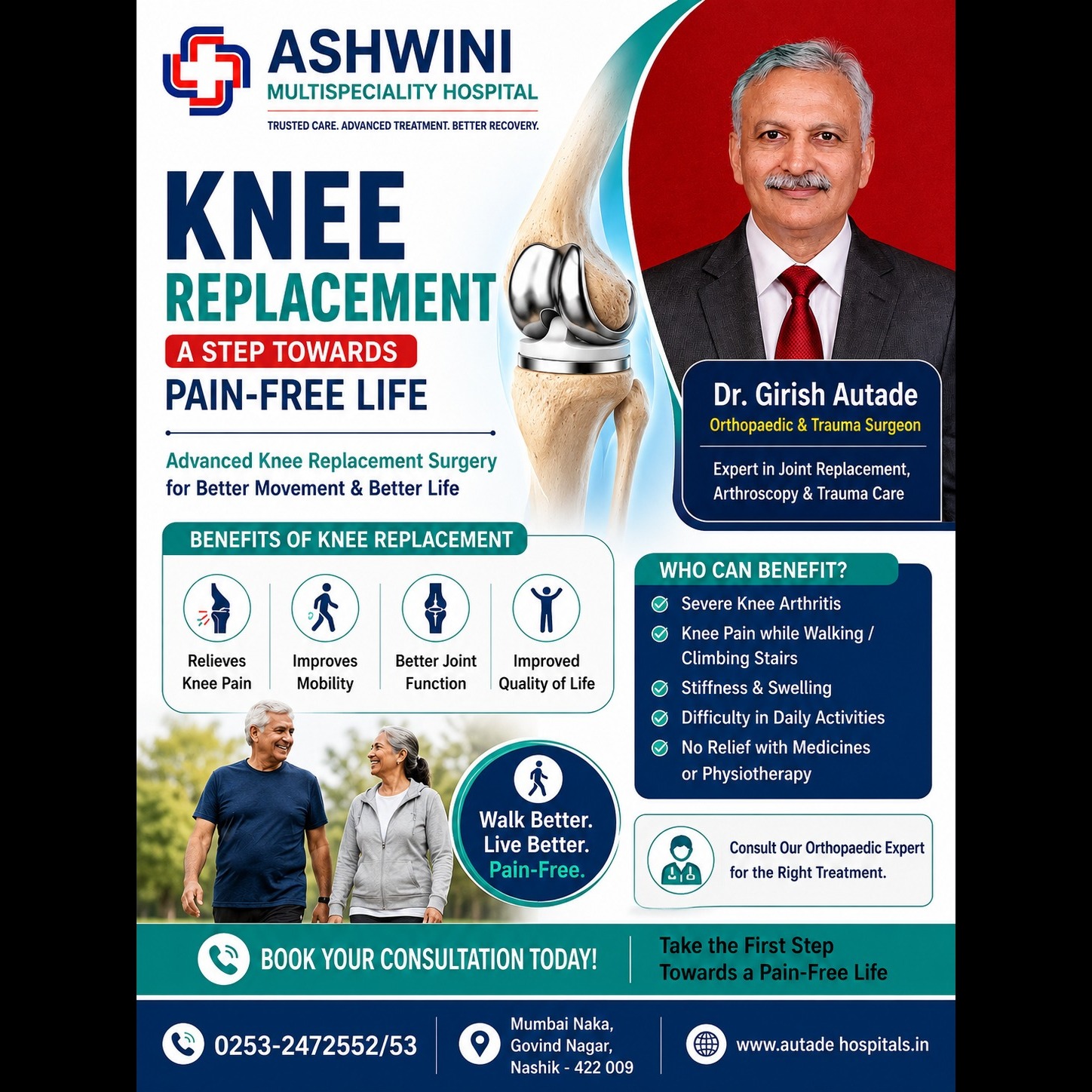
What is Knee Replacement? Knee Replacement Surgery is an advanced surgical procedure used to relieve severe knee pain, reduce disability, and improve movement when the knee joint has been significantly damaged. When the cartilage inside the knee wears away, the bones can rub against each other, causing pain, swelling, stiffness, and difficulty with daily activities. When medicines, physiotherapy, lifestyle changes, and other non-surgical treatments do not provide adequate relief, Total Knee Replacement (TKR) may be considered. When is Knee Replacement Needed? Knee replacement is not required for every person with knee pain. However, an Orthopaedic Surgeon should evaluate you if you experience: Persistent knee pain while walking or standing Difficulty climbing or descending stairs Knee swelling and stiffness Difficulty bending or straightening the knee A feeling of knee instability Knee pain that interferes with sleep Difficulty performing daily activities Persistent symptoms despite medicines and physiotherapy Common Causes of Knee Replacement 1. Osteoarthritis Osteoarthritis is one of the most common causes of knee joint damage. Progressive cartilage wear can lead to pain, stiffness, and reduced mobility. 2. Rheumatoid Arthritis Inflammatory arthritis such as rheumatoid arthritis can damage the cartilage and other structures of the knee joint. 3. Previous Knee Injury A previous serious knee injury, fracture, or ligament injury may increase the risk of developing arthritis and joint damage later in life. 4. Severe Cartilage Damage When the cartilage is severely damaged, the protective cushioning between the bones is reduced, resulting in increased friction, pain, and stiffness. What Happens During Knee Replacement Surgery? During knee replacement surgery, the damaged surfaces of the knee joint are carefully removed and replaced with artificial joint components called prostheses. The damaged surfaces of the femur and tibia are replaced with appropriate implant components. Depending on the condition of the knee, the underside of the patella may also be treated. The main goals of knee replacement are: Pain Relief + Improved Knee Function + Better Mobility What is Total Knee Replacement (TKR)? Total Knee Replacement (TKR) is a procedure in which the major damaged joint surfaces of the knee are replaced with artificial components. It is generally considered for patients with advanced knee arthritis who continue to have significant pain and functional limitations despite appropriate non-surgical treatment. Tests Before Knee Replacement Surgery Before surgery, the Orthopaedic Surgeon performs a detailed evaluation. Depending on the patient's condition, investigations may include: Clinical examination Weight-bearing knee X-rays Standing X-rays when required Blood investigations ECG and other pre-operative tests Medical fitness assessment The treatment plan is developed based on the patient's overall health, age, activity level, symptoms, and condition of the knee joint. How Long Does Knee Replacement Surgery Take? The duration of knee replacement surgery can vary depending on the patient's condition and the type of procedure being performed. The surgery is generally completed within a few hours. The type of anaesthesia is decided by the Anaesthetist based on the patient's medical condition and surgical requirements. Recovery After Knee Replacement Early mobilization and physiotherapy play an important role after knee replacement surgery. Under the guidance of a physiotherapist, patients may gradually work on: Knee movement exercises Quadriceps strengthening Walking training Balance exercises Stair training Home exercise programs Recovery varies from person to person and can depend on age, muscle strength, general health, pre-operative mobility, and commitment to rehabilitation. Care After Knee Replacement Surgery Following the surgeon's and physiotherapist's instructions is important for a safe and effective recovery. Important Tips: Attend physiotherapy sessions regularly. Perform prescribed exercises correctly. Take precautions to prevent falls, especially during early recovery. Maintain a healthy body weight. Keep the surgical wound clean and follow wound-care instructions. Attend scheduled follow-up appointments. Avoid suddenly increasing physical activity. Benefits of Knee Replacement For appropriately selected patients, knee replacement can help: Reduce knee pain Improve walking ability Improve knee function Reduce stiffness Make daily activities easier Improve overall quality of life Support greater independence in daily activities Is Knee Replacement Necessary for Everyone? No. Not everyone with knee pain requires knee replacement. In early or moderate arthritis, treatments such as weight management, medicines, physiotherapy, activity modification, and other non-surgical options may provide relief. However, when knee arthritis becomes severe and pain and functional limitations significantly affect daily life despite appropriate conservative treatment, knee replacement may be discussed with an Orthopaedic Surgeon. Can You Walk After Knee Replacement? Yes. With appropriate rehabilitation and physiotherapy, many patients are able to return to walking and daily activities after knee replacement. Recovery time varies between individuals. It is important to follow your surgeon's and physiotherapist's rehabilitation plan rather than comparing your recovery with someone else's. Don't Ignore Persistent Knee Pain Do not assume that persistent knee pain is simply a normal part of ageing. Early evaluation can help identify the cause of knee pain and allow appropriate treatment to begin at the right time. In some patients, surgery may be avoided or delayed with appropriate treatment. In patients with advanced arthritis, appropriately timed knee replacement may help improve mobility and quality of life. Orthopaedic & Knee Replacement Care at Ashwini Multispeciality Hospital, Nashik Ashwini Multispeciality Hospital, Nashik provides Orthopaedic care for conditions including knee arthritis, knee pain, sports injuries, and joint replacement. Under the guidance of Dr. Girish Autade – Orthopaedic & Trauma Surgeon, treatment is planned according to the patient's symptoms, X-ray findings, age, activity level, overall health, and individual requirements. Are You Suffering from Knee Pain? If you have persistent knee pain, stiffness, swelling, or difficulty walking, an appropriate Orthopaedic evaluation can help determine the right treatment for you. Early Diagnosis • Expert Orthopaedic Care • Better Recovery Frequently Asked Questions (FAQs) 1. What is knee replacement? Knee replacement is a surgical procedure in which damaged surfaces of the knee joint are replaced with artificial joint components. 2. When should knee replacement be considered? Knee replacement may be considered when severe arthritis causes persistent pain and significant difficulty with daily activities despite appropriate non-surgical treatment. 3. Is physiotherapy necessary after knee replacement? Yes. Physiotherapy is an important part of rehabilitation and helps improve knee movement, muscle strength, walking ability, and functional recovery. 4. Can I walk normally after knee replacement? Many appropriately selected patients can return to walking and daily activities after rehabilitation. Recovery varies from person to person. 5. Does every person with knee pain need knee replacement? No. Knee pain can have many different causes. Treatment depends on the underlying condition, severity of symptoms, examination findings, and imaging results


