Knee pain is a common problem that can affect people of different ages. It may occur because of an injury, overuse, arthritis, ligament problems, meniscus damage, or other conditions affecting the knee joint. While occasional mild discomfort may settle with appropriate rest and care, persistent or recurring knee pain should not be ignored.
Early recognition of symptoms and timely evaluation by an orthopaedic specialist can help identify the cause and guide appropriate treatment.
What Does Knee Pain Mean?
The knee is a complex joint that helps us walk, climb stairs, sit, stand, run and perform everyday activities. It contains bones, cartilage, menisci, ligaments, tendons and muscles.
Pain can develop when one or more of these structures becomes irritated, injured or damaged.
Common causes include:
Osteoarthritis
Sports injuries
Ligament injuries
Meniscus tears
Tendinitis
Patellofemoral pain
Previous knee injury
Overuse or repetitive stress
Inflammatory joint conditions
Knee osteoarthritis commonly causes pain, stiffness, swelling, difficulty moving the knee and sometimes grinding or crackling sensations.
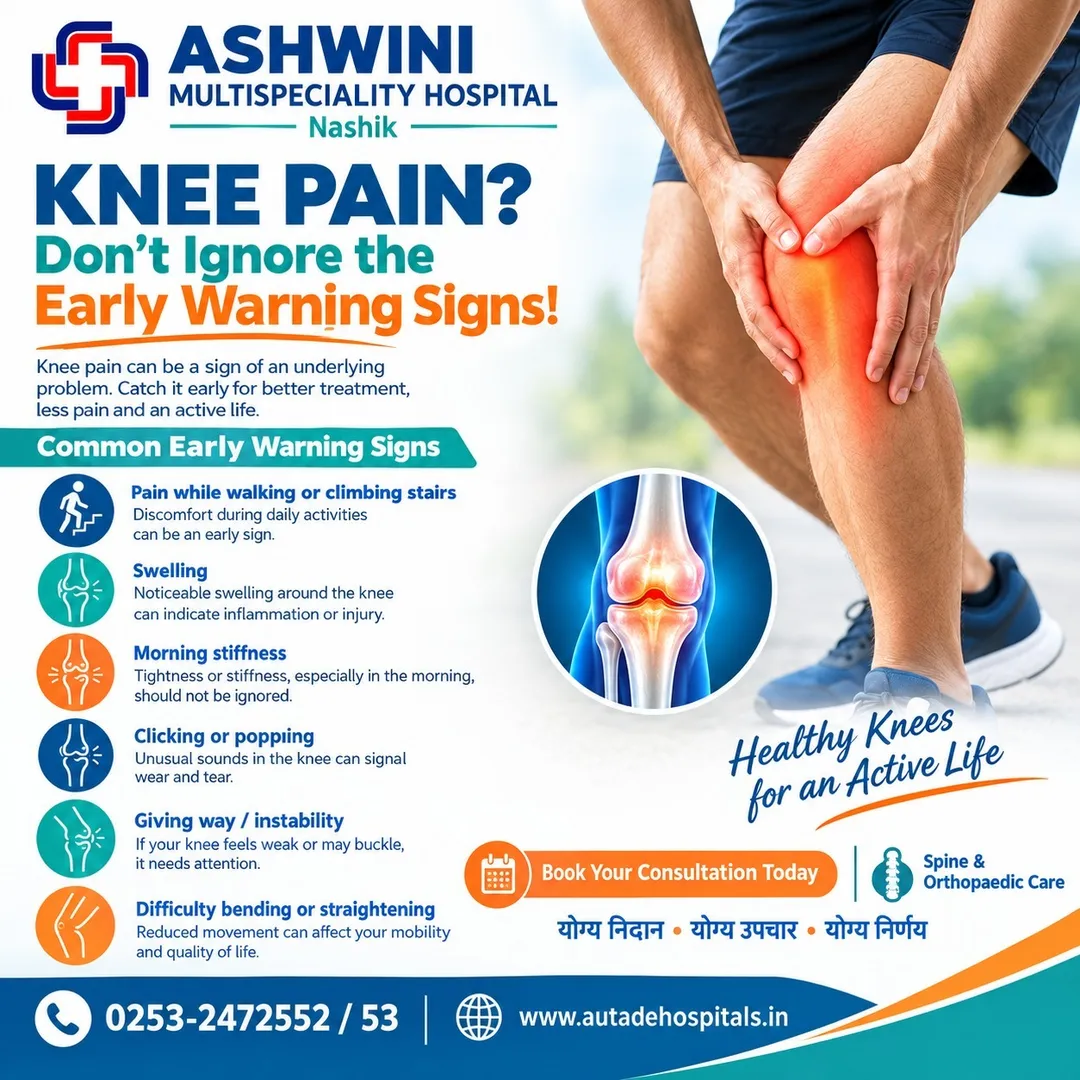
Early Warning Signs of Knee Problems
1. Pain While Walking or Climbing Stairs
If your knee hurts regularly while walking, climbing or descending stairs, squatting, or getting up from a chair, it may indicate an underlying knee problem.
Pain that repeatedly interferes with normal activities deserves medical attention.
2. Knee Swelling
Swelling may occur after an injury or because of inflammation within the knee.
Repeated or persistent swelling should be evaluated, especially when it is associated with pain, stiffness or difficulty moving the knee.
3. Morning Stiffness
Do you feel that your knee is stiff when you wake up or after sitting for a long time?
Stiffness can occur with arthritis and other knee conditions. Persistent stiffness, particularly when it affects daily activities, should not be ignored.
4. Clicking, Grinding or Popping
Some painless knee sounds can be harmless. However, clicking or grinding accompanied by pain, swelling, locking or difficulty moving the knee may require evaluation.
5. Knee Giving Way or Instability
If your knee suddenly feels as though it may buckle or give way while walking, this can sometimes be associated with ligament, meniscus or other structural problems.
Repeated episodes of instability should be assessed by an orthopaedic specialist.
6. Difficulty Bending or Straightening the Knee
Reduced movement, difficulty fully bending the knee or inability to straighten it can be an important warning sign.
A knee that becomes locked or cannot be moved normally after an injury requires prompt medical assessment.
7. Pain That Keeps Coming Back
If knee pain improves temporarily but repeatedly returns, it is important to identify the underlying cause rather than continuously treating the symptom.
Persistent pain may be related to arthritis, overuse, previous injury or another knee condition.
When Should You See an Orthopaedic Doctor?
Consider an orthopaedic evaluation if:
Knee pain persists or keeps returning
Pain interferes with walking or daily activities
You have repeated swelling
Your knee feels unstable or gives way
You have difficulty bending or straightening the knee
You experience painful clicking or locking
Symptoms continue after a knee injury
Knee pain affects your sleep or normal activities
Medical assessment is particularly important when pain or swelling is getting worse or is affecting everyday activities.
Knee Pain After an Injury
A sudden twist, fall, sports injury or direct blow can damage structures such as ligaments or the meniscus.
If severe pain occurs after an injury, you cannot put weight on the leg, the knee becomes significantly swollen, or you cannot bend or straighten it, seek medical attention promptly.
Do Not Ignore These Red Flags
Seek urgent medical attention if the knee is:
Very painful after a significant injury
Unable to bear weight
Very swollen
Hot or red
Associated with fever or feeling unwell
Unable to bend or straighten
A hot, swollen joint accompanied by fever or feeling unwell can sometimes indicate an infection and requires urgent assessment.
How Can You Protect Your Knees?
Some everyday habits can support knee health:
Stay physically active: Choose appropriate low-impact activities and avoid suddenly increasing exercise intensity.
Maintain a healthy weight: Excess body weight can increase stress on weight-bearing joints such as the knees.
Strengthen supporting muscles: Appropriate exercises can help improve strength and function around the knee.
Take sports injuries seriously: Do not continue playing through significant pain or swelling.
Do not ignore recurring symptoms: Repeated pain, swelling, locking or instability deserves professional evaluation.
Diagnosis and Treatment
Treatment depends on the underlying cause and severity of the problem. An orthopaedic specialist may perform a physical examination and, when appropriate, recommend investigations such as an X-ray or MRI.
Treatment may include:
Activity modification
Physiotherapy and rehabilitation
Exercise-based strengthening
Medicines when appropriate
Weight-management advice
Injections in selected cases
Arthroscopic procedures for certain conditions
Surgical treatment when indicated
Not every knee problem requires surgery. The appropriate treatment depends on the diagnosis, symptoms, examination findings and individual patient factors.
Takeaway
Knee pain is not always “just age” or normal wear and tear.
Pain while walking or climbing stairs, swelling, stiffness, painful clicking, locking, instability or reduced movement can be early warning signs of a knee problem.
Recognizing these symptoms early and getting the right medical evaluation can help you understand the cause and choose an appropriate treatment plan.
Expert Orthopaedic Care at Ashwini Multispeciality Hospital, Nashik
At Ashwini Multispeciality Hospital, Nashik, patients can receive evaluation and treatment for various knee and orthopaedic conditions.
Dr. Girish Autade – Orthopedic Surgeon
For consultation and further information:
Phone: 0253-2472552 / 53
Website: www.autadehospitals.in
Don’t ignore persistent knee pain. Early evaluation can help you take the right step toward better knee health.
Keywords