

+918048036466

Currently it only shows your basic business info. Start adding relevant business details such as description, images and products or services to gain your customers attention by using Boost 360 android app / iOS App / web portal.

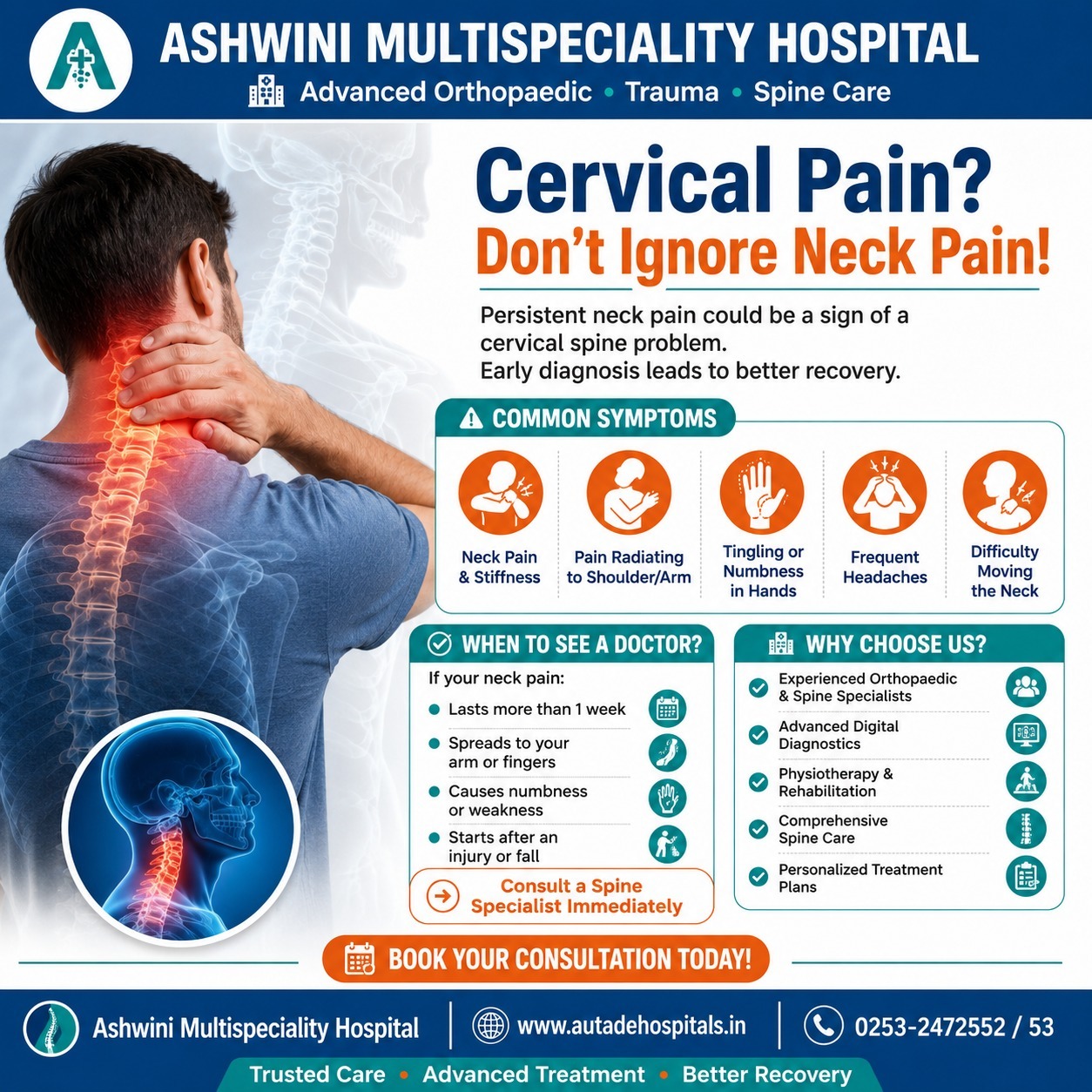
Neck pain, medically known as cervical pain, has become one of the most common musculoskeletal problems in today's digital world. Whether you spend long hours working on a computer, frequently use a smartphone, drive for extended periods, or have a physically demanding job, your cervical spine experiences continuous stress. Many people ignore neck pain, assuming it will disappear on its own. While occasional muscle strain may improve with rest, persistent or worsening neck pain can indicate a more serious cervical spine condition that requires medical attention. At Ashwini Multispeciality Hospital, Nashik, our experienced orthopaedic and spine specialists provide comprehensive diagnosis and advanced treatment for cervical spine disorders, helping patients regain comfort, mobility, and quality of life. What is Cervical Pain? The cervical spine consists of seven vertebrae (C1 to C7) located in the neck. These vertebrae support the head, protect the spinal cord, and allow smooth movement in multiple directions. Between the vertebrae are soft discs that act as shock absorbers. Ligaments, muscles, joints, and nerves work together to provide stability and movement. When any of these structures become injured, inflamed, or compressed, cervical pain develops. The pain may remain localized in the neck or radiate to the shoulders, arms, and hands depending on the underlying cause. Common Causes of Cervical Pain 1. Poor Posture The most common cause of neck pain today is poor posture. Looking down at mobile phones for hours, working on laptops without proper ergonomics, or sitting incorrectly places excessive pressure on the cervical spine. 2. Cervical Spondylosis As we age, the cervical discs gradually lose water content and become less flexible. This natural wear and tear is called cervical spondylosis and is a leading cause of chronic neck pain. 3. Cervical Disc Herniation (Slipped Disc) A damaged cervical disc may bulge or rupture, pressing on nearby nerves. This often causes pain that travels into the shoulder, arm, or fingers. 4. Muscle Strain Sleeping in an awkward position, lifting heavy objects, or sudden neck movements can strain muscles and ligaments, resulting in pain and stiffness. 5. Injuries Road traffic accidents, sports injuries, and falls may damage the cervical spine and require immediate evaluation. 6. Nerve Compression Bone spurs, disc problems, or narrowing of the spinal canal may compress nerves, causing pain, tingling, numbness, or weakness. Symptoms of Cervical Pain Symptoms vary depending on the underlying condition but commonly include: Persistent neck pain Neck stiffness Difficulty turning the neck Pain radiating to the shoulder Pain extending into the arm Tingling sensation in fingers Numbness in the hands Weak grip strength Headaches beginning from the neck Muscle spasms Reduced neck movement Pain while looking up or down Some patients experience pain only during certain activities, while others have constant discomfort throughout the day. Warning Signs You Should Never Ignore Seek medical attention immediately if you experience: Severe neck pain after an accident Weakness in the arms Loss of sensation Difficulty walking Problems with balance Loss of bladder or bowel control Progressive numbness Fever along with neck pain These symptoms may indicate serious spinal cord or nerve compression requiring urgent treatment. Who is at Risk? Anyone can develop cervical pain, but the risk is higher among: IT professionals Office workers Teachers Drivers Bank employees Students Factory workers Elderly individuals Mobile phone users People with sedentary lifestyles How is Cervical Pain Diagnosed? At Ashwini Multispeciality Hospital, diagnosis begins with a detailed medical history and physical examination. Depending on the symptoms, investigations may include: Digital X-ray MRI Scan CT Scan Neurological examination Muscle strength testing Reflex assessment Sensory evaluation An accurate diagnosis helps determine the exact cause and guides the most appropriate treatment plan. Treatment for Cervical Pain Treatment depends on the severity and underlying cause. Medications Pain relievers, muscle relaxants, and anti-inflammatory medications help reduce pain and inflammation. Physiotherapy Physiotherapy plays an important role in improving flexibility, strengthening neck muscles, correcting posture, and preventing recurrence. Lifestyle Modification Simple changes such as improving workstation ergonomics, limiting prolonged mobile use, maintaining proper posture, and taking regular breaks can significantly reduce symptoms. Cervical Collar A cervical collar may be recommended temporarily to reduce stress on the neck during acute pain episodes. Minimally Invasive Procedures Some patients benefit from targeted injections or other minimally invasive treatments to relieve pain and inflammation. Spine Surgery Surgery is considered only when conservative treatment fails or when there is significant nerve compression, progressive weakness, or spinal cord involvement. Modern spine surgery techniques allow faster recovery, less pain, and improved outcomes in appropriately selected patients. Home Care Tips While recovering, you can support healing by: Applying hot or cold packs as advised. Maintaining proper posture. Avoiding sudden neck movements. Sleeping with a supportive pillow. Taking frequent breaks during desk work. Performing prescribed neck exercises. Staying physically active. Avoid self-medication or neck manipulation without medical advice. Prevention Tips Most cases of cervical pain can be prevented by adopting healthy habits. Keep your monitor at eye level. Sit with your back well supported. Avoid looking down at your phone for long periods. Stretch every 30–45 minutes while working. Exercise regularly. Strengthen your neck and shoulder muscles. Maintain a healthy body weight. Sleep on a supportive mattress and pillow. Avoid carrying heavy bags on one shoulder. These simple measures can greatly reduce stress on the cervical spine. Why Choose Ashwini Multispeciality Hospital? Ashwini Multispeciality Hospital is committed to providing comprehensive orthopaedic and spine care with a patient-first approach. Our strengths include: Experienced orthopaedic and spine specialists Advanced diagnostic facilities Modern treatment protocols Personalized rehabilitation plans Physiotherapy support Comprehensive trauma and spine care Focus on early recovery and long-term outcomes Our goal is not only to relieve pain but also to restore mobility, function, and confidence in daily life. Frequently Asked Questions Is cervical pain serious? Mild neck pain often improves with rest and posture correction. However, persistent pain, numbness, weakness, or pain following an injury should always be evaluated by a specialist. Can cervical pain heal without surgery? Yes. Most patients recover with medications, physiotherapy, posture correction, and lifestyle modifications. Surgery is recommended only in selected cases. Which sleeping position is best? Sleeping on your back or side with a supportive pillow that keeps your neck in a neutral position is generally recommended. Can mobile phone use cause cervical pain? Yes. Looking down at a phone for prolonged periods places extra strain on the cervical spine, often leading to 'text neck, ' muscle fatigue, and chronic pain. Conclusion Cervical pain is more than just a temporary ache. It can affect your work, sleep, productivity, and overall quality of life. Ignoring symptoms may allow underlying problems to worsen, increasing the risk of nerve damage and long-term disability. The good news is that most cervical spine conditions can be successfully managed with early diagnosis, appropriate treatment, and healthy lifestyle habits. If you have persistent neck pain, pain radiating to your arms, numbness, or weakness, don't wait. Seek expert evaluation and begin the right treatment as early as possible. Book Your Consultation Today Ashwini Multispeciality Hospital Trusted Orthopaedic, Trauma & Spine Care in Nashik Website: www.autadehospitals.in Phone: 0253-2472552 / 53


