

+918048036466

Currently it only shows your basic business info. Start adding relevant business details such as description, images and products or services to gain your customers attention by using Boost 360 android app / iOS App / web portal.

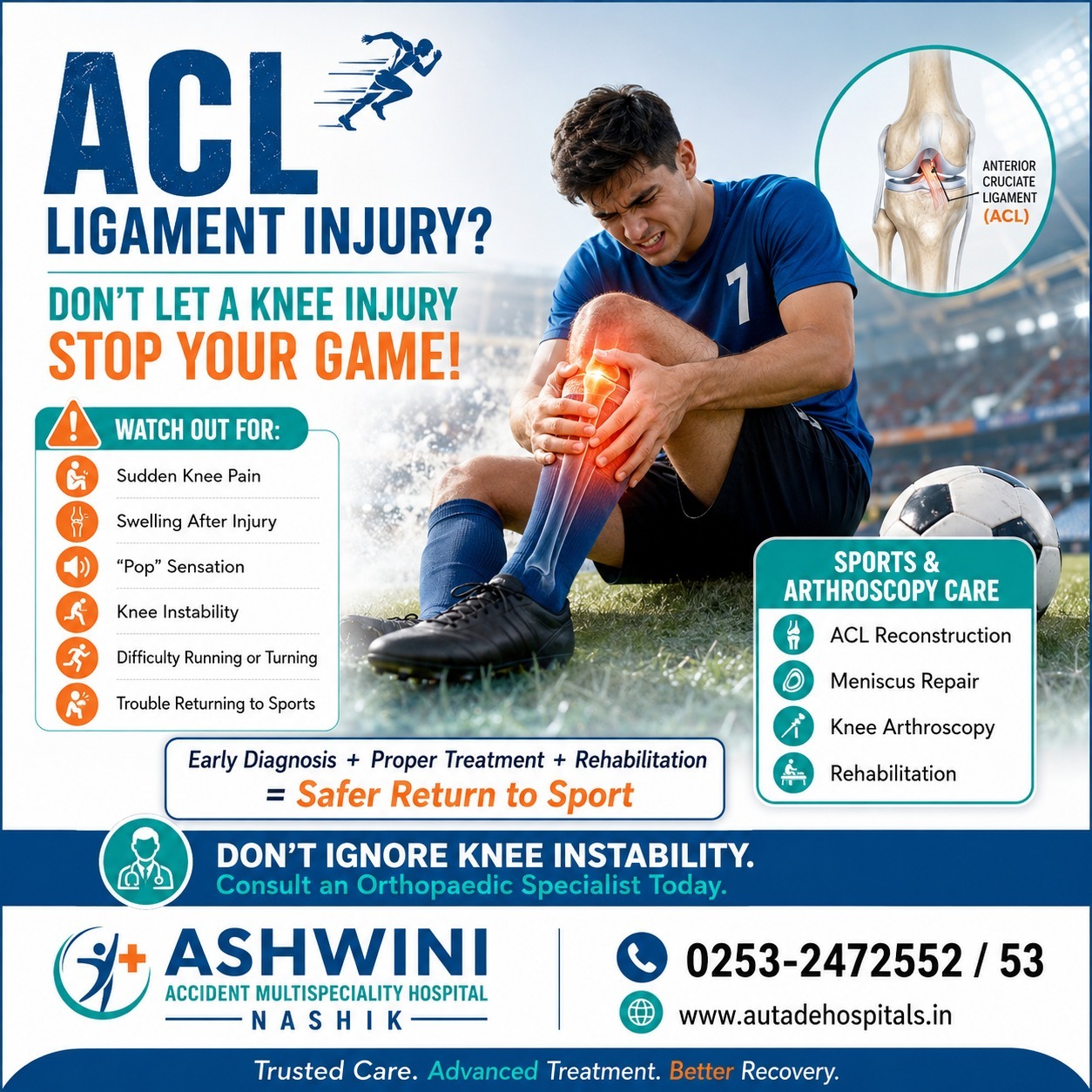
ACL (Anterior Cruciate Ligament) injury is one of the most common knee injuries seen in young athletes. It can occur during sports that involve sudden direction changes, jumping, landing, twisting, or sudden stopping. Football, cricket, basketball, kabaddi and other high-impact sports can put significant stress on the knee. For young athletes, an ACL injury should not be ignored. Early diagnosis and an appropriate treatment plan can help protect the knee and support a safe return to sports. What is the ACL? The ACL is one of the major ligaments inside the knee joint. It connects the thigh bone (femur) to the shin bone (tibia) and plays an important role in maintaining knee stability. When the ACL is stretched or torn, the knee may become unstable, particularly during running, jumping or changing direction. How Does an ACL Injury Occur? ACL injuries commonly happen when an athlete: Suddenly changes direction while running Lands awkwardly after a jump Stops suddenly while running Twists the knee while the foot remains planted Receives a direct impact to the knee Participates in sports involving frequent pivoting and cutting movements Sometimes athletes describe hearing or feeling a “pop” at the moment of injury. Common Symptoms of ACL Injury The symptoms can vary depending on the severity of the injury and whether other structures of the knee are also damaged. Common signs include: Sudden knee pain after an injury Swelling around the knee A popping sensation or sound Difficulty walking or putting weight on the leg Reduced knee movement Feeling that the knee is unstable or “giving way” Difficulty returning to running or sports Persistent symptoms after a sports injury should be evaluated by an orthopaedic specialist. How Is ACL Injury Diagnosed? Diagnosis usually begins with a detailed medical history and physical examination. The doctor may perform specific knee stability tests to assess the ACL. An X-ray may be recommended to check for bone injuries, while an MRI scan can provide detailed information about the ACL and other soft tissues, including the meniscus and cartilage. ACL Treatment Treatment depends on several factors, including the athlete's age, activity level, severity of the tear, associated injuries and sporting goals. Some patients may benefit from: Rest and activity modification Pain and swelling management Physiotherapy Muscle-strengthening exercises Balance and stability training Gradual rehabilitation For athletes with significant instability, complete ACL tears, associated injuries, or a high demand for pivoting sports, ACL reconstruction surgery may be considered. The decision for surgery should be made after evaluation by an experienced orthopaedic specialist. ACL Reconstruction and Rehabilitation ACL reconstruction involves replacing the damaged ligament with a suitable graft. However, surgery is only one part of recovery. A structured rehabilitation programme is essential for restoring: Strength → Stability → Balance → Agility → Sport-specific performance The athlete should return to running, training and competitive sports gradually and according to their rehabilitation progress and medical advice. Can ACL Injuries Be Prevented? Although every ACL injury cannot be prevented, proper training can reduce the risk. Young athletes should focus on: Proper warm-up before sports Strengthening the thigh and hip muscles Balance and coordination exercises Correct jumping and landing techniques Sport-specific conditioning Avoiding sudden increases in training intensity Adequate recovery between training sessions Don't Ignore a Knee Injury A young athlete may feel better after the initial pain and swelling settle, but persistent instability can affect sports performance and potentially contribute to further knee problems. If your knee feels unstable after a sports injury, get it evaluated rather than returning to play too quickly. 🏥 Ashwini Accident & Multispeciality Hospital, Nashik Orthopaedic Care | Sports Injury Treatment | Arthroscopy | Physiotherapy & Rehabilitation Trusted Care. Advanced Treatment. Better Recovery. This article is for general awareness and does not replace an individual medical evaluation. Treatment decisions should be made after consultation with a qualified orthopaedic specialist.


