

+918048036466

Currently it only shows your basic business info. Start adding relevant business details such as description, images and products or services to gain your customers attention by using Boost 360 android app / iOS App / web portal.

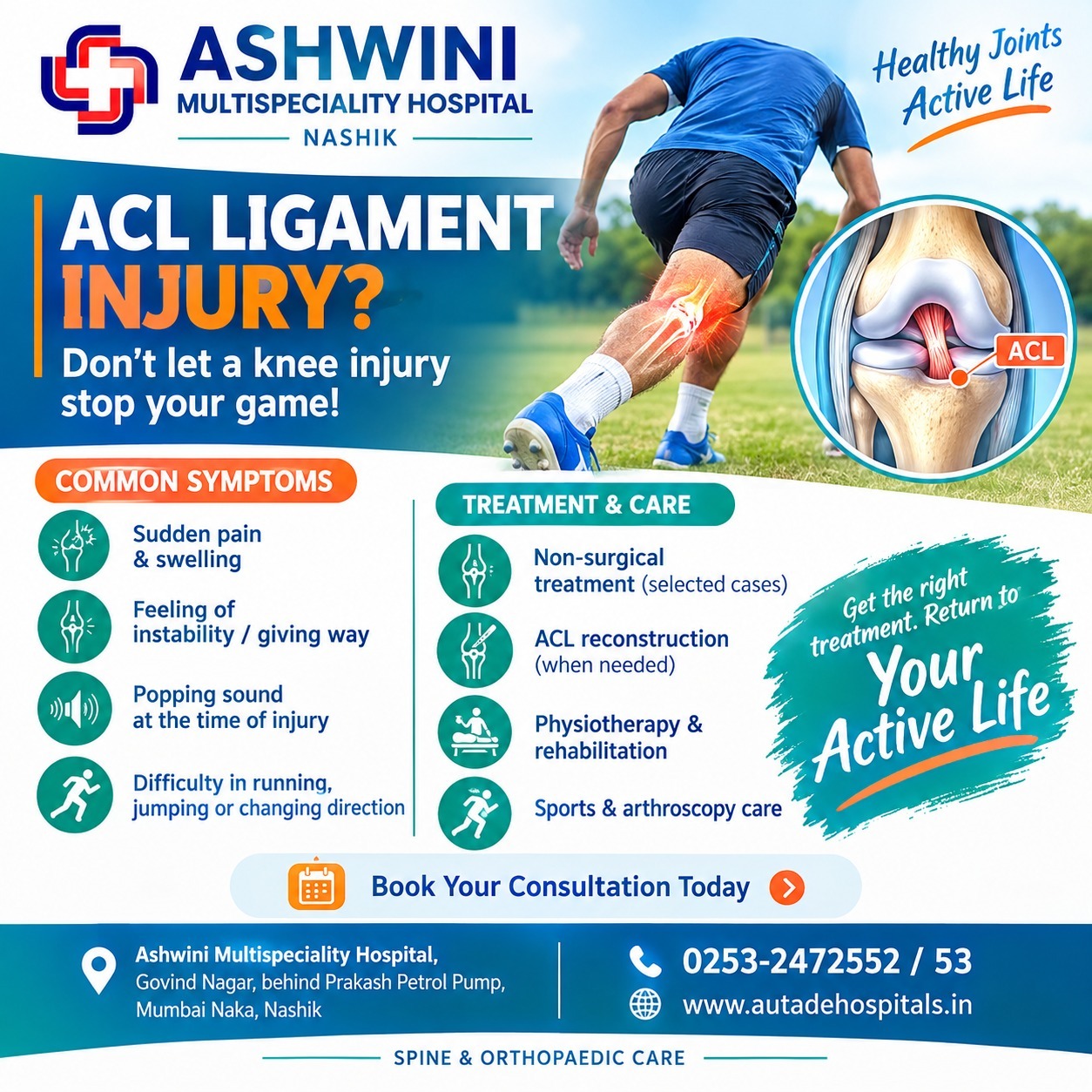
ACL (Anterior Cruciate Ligament) is one of the important ligaments inside the knee that helps maintain knee stability, particularly during running, jumping, sudden stopping and changes in direction. ACL injuries are common in sports such as football, cricket, basketball, kabaddi and skiing, but they can also occur during everyday activities involving a sudden twist or awkward landing. What Causes an ACL Injury? An ACL injury commonly occurs when the knee suddenly twists or changes direction. Common situations include: Sudden stopping while running Rapid change of direction Incorrect landing after a jump Twisting of the knee Sports-related collision Falling or direct impact to the knee Many ACL injuries occur without direct contact, particularly during pivoting or landing movements. Common Symptoms of ACL Injury A person with an ACL injury may experience: A popping sensation or sound at the time of injury Sudden knee pain Swelling, sometimes developing soon after injury Difficulty putting weight on the leg Reduced knee movement Feeling that the knee is unstable or “giving way” Difficulty running, jumping or changing direction A combination of a popping sensation and swelling can be an important warning sign of an ACL injury. How Is an ACL Injury Diagnosed? An orthopaedic evaluation begins with a detailed history and physical examination. The doctor assesses knee stability, movement, swelling and ligament function. MRI of the knee can help confirm an ACL tear and identify associated injuries involving the meniscus, cartilage or other ligaments. X-rays may also be used to check for associated bone injuries. ACL Injury Treatment Treatment depends on several factors, including the severity of the injury, knee instability, activity level, age, work or sports requirements, and associated meniscus or cartilage injuries. 1. Non-Surgical Treatment Some patients may be managed without surgery using: Rest and activity modification Appropriate medication as advised by a doctor Physiotherapy Strengthening of the thigh muscles Balance and stability exercises Gradual return to activities Non-operative treatment can be appropriate for selected patients, particularly those with lower activity demands and a stable knee. 2. ACL Reconstruction For patients with significant instability or those wishing to return to demanding sports and activities, ACL reconstruction may be considered. During reconstruction, the damaged ACL is replaced with a suitable tendon graft. The choice of treatment should be made after clinical assessment and discussion with an orthopaedic surgeon. Current AAOS guidance notes that, when surgery is indicated for an acute isolated ACL tear, earlier reconstruction is preferred because the risk of additional meniscus and cartilage injury can increase over time. Why Rehabilitation Is Important Treatment does not end with surgery. A structured rehabilitation program is an important part of recovery. Physiotherapy may focus on: Restoring knee movement Reducing swelling Improving quadriceps and hamstring strength Improving balance and coordination Gradually increasing functional activity Sport-specific training when appropriate Return to sports should be based on recovery and functional assessment rather than simply the passage of a fixed number of weeks. Can ACL Injuries Be Prevented? Risk-reduction programs that include appropriate warm-up, strength training, balance exercises, landing techniques and movement training can help reduce the risk of ACL injury in athletes participating in high-risk sports. When Should You Consult an Orthopaedic Doctor? Do not ignore a knee injury if you experience a pop, sudden swelling, persistent pain, instability or difficulty walking. Early assessment can help identify an ACL injury and associated meniscus or cartilage damage and guide an appropriate treatment plan. Sports & Arthroscopy Care at Ashwini Multispeciality Hospital At Ashwini Multispeciality Hospital, Nashik, patients with sports-related knee injuries can receive orthopaedic evaluation and individualized treatment planning. Dr. Girish Autade – Orthopedic Surgeon 📞 0253-2472552 / 53 🌐 www.autadehospitals.in Don’t let an ACL injury stop your active life. Get your knee evaluated and follow the right treatment and rehabilitation plan.


