Surgery is an important step toward recovery, but the healing process does not end in the operating room. Post-operative physiotherapy plays a vital role in helping patients regain movement, strength, balance, and confidence after surgery.
At Ashwini Multispeciality Hospital, Nashik, physiotherapy and rehabilitation are an important part of recovery for patients undergoing orthopaedic and other surgeries.
What Is Post-Operative Physiotherapy?
Post-operative physiotherapy is a structured rehabilitation program designed according to the patient's surgery, age, physical condition, and recovery progress. It may begin soon after surgery and gradually progress as healing takes place.
The physiotherapist guides the patient through safe exercises, mobility training, strengthening, and functional activities.
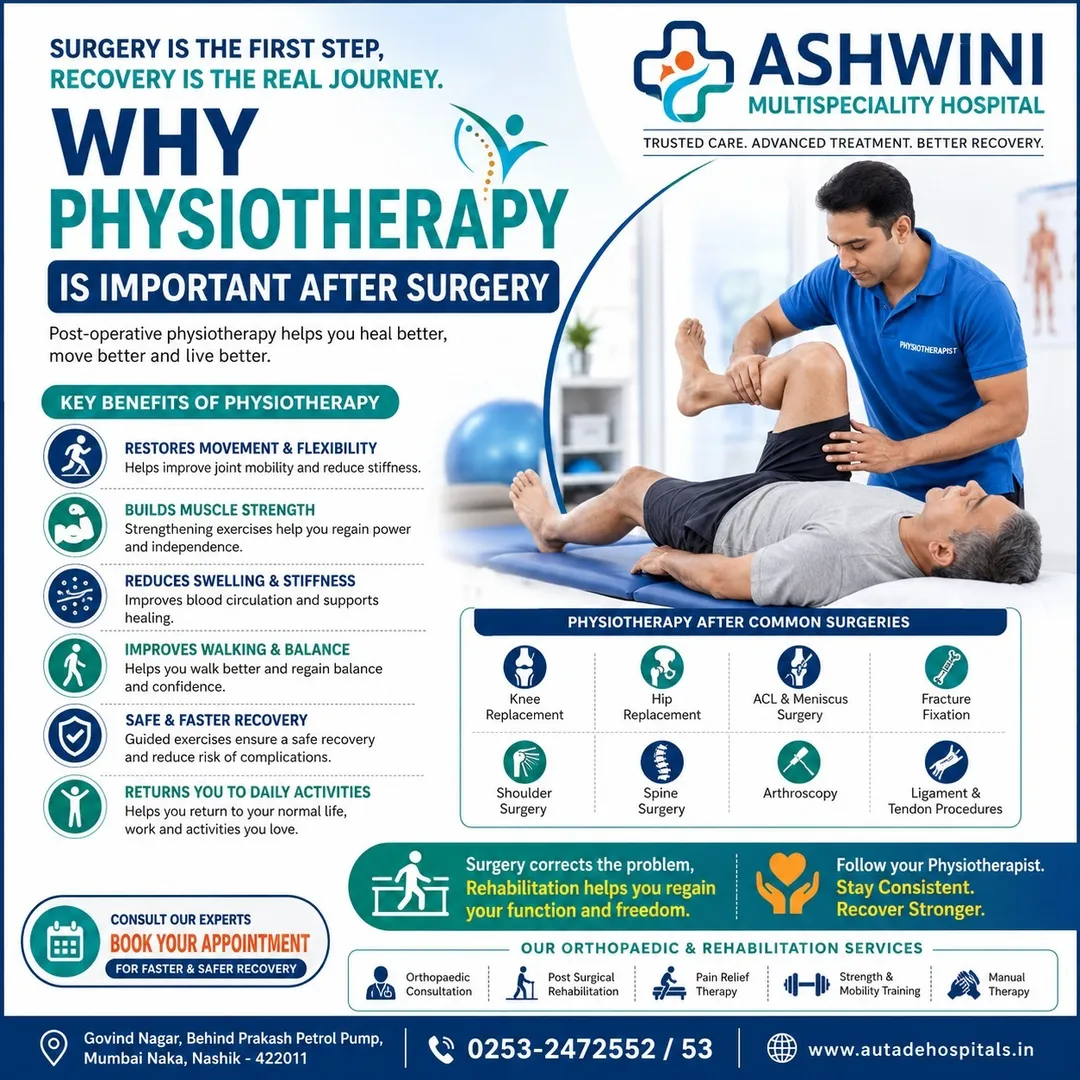
Why Is Physiotherapy Important After Surgery?
1. Helps Restore Movement
After surgery, pain, swelling, and prolonged rest can make joints and muscles stiff. Physiotherapy helps gradually restore joint mobility and flexibility.
2. Builds Muscle Strength
Reduced activity after surgery can lead to muscle weakness. Carefully planned strengthening exercises help rebuild the muscles needed for normal movement and daily activities.
3. Reduces Stiffness and Swelling
Appropriate movements and therapeutic exercises can help improve circulation and reduce stiffness and swelling, supporting the overall recovery process.
4. Helps Improve Walking and Balance
After knee, hip, ankle, or spine surgery, patients may initially have difficulty walking. Physiotherapy can help improve gait, balance, coordination, and confidence while using walking aids when necessary.
5. Supports a Safe Recovery
Exercises need to be appropriate for the type of surgery and stage of healing. A physiotherapist can teach patients which movements are safe and which activities should be avoided during recovery.
6. Helps Patients Return to Daily Activities
The ultimate goal of rehabilitation is not just to reduce pain—it is to help patients return to everyday activities such as walking, climbing stairs, sitting, standing, and performing household or work-related activities.
7. Improves Functional Recovery
Regular rehabilitation can help patients progressively regain independence and improve their ability to perform normal activities.
Physiotherapy After Common Orthopaedic Surgeries
Physiotherapy may be recommended after procedures such as:
Knee replacement surgery
Hip replacement surgery
ACL and meniscus surgery
Fracture fixation surgery
Shoulder surgery
Spine surgery
Arthroscopy
Ligament and tendon procedures
The rehabilitation plan is different for every surgery and should be followed according to the surgeon's and physiotherapist's advice.
What Happens If Physiotherapy Is Ignored?
Avoiding rehabilitation or doing exercises incorrectly may contribute to persistent stiffness, muscle weakness, reduced mobility, and slower functional recovery. However, the appropriate amount and intensity of exercise depends on the individual patient and the type of surgery.
Tips for Better Post-Surgery Rehabilitation
Follow your surgeon's and physiotherapist's instructions.
Perform prescribed exercises regularly.
Do not suddenly increase exercise intensity.
Use walking aids as advised.
Maintain adequate nutrition and hydration.
Attend scheduled follow-up appointments.
Report unusual or worsening pain, swelling, wound problems, fever, or other concerning symptoms to your healthcare team.
Conclusion
Surgery corrects the problem; rehabilitation helps you regain function.
Post-operative physiotherapy is an important part of recovery after many surgeries. With appropriate exercises, gradual strengthening, mobility training, and professional guidance, patients can work toward a safer and more confident return to their daily activities.
Ashwini Multispeciality Hospital, Nashik
Trusted Care. Advanced Treatment. Better Recovery.
Consult your orthopaedic surgeon and physiotherapist for a rehabilitation plan tailored to your surgery and individual recovery.
Keywords