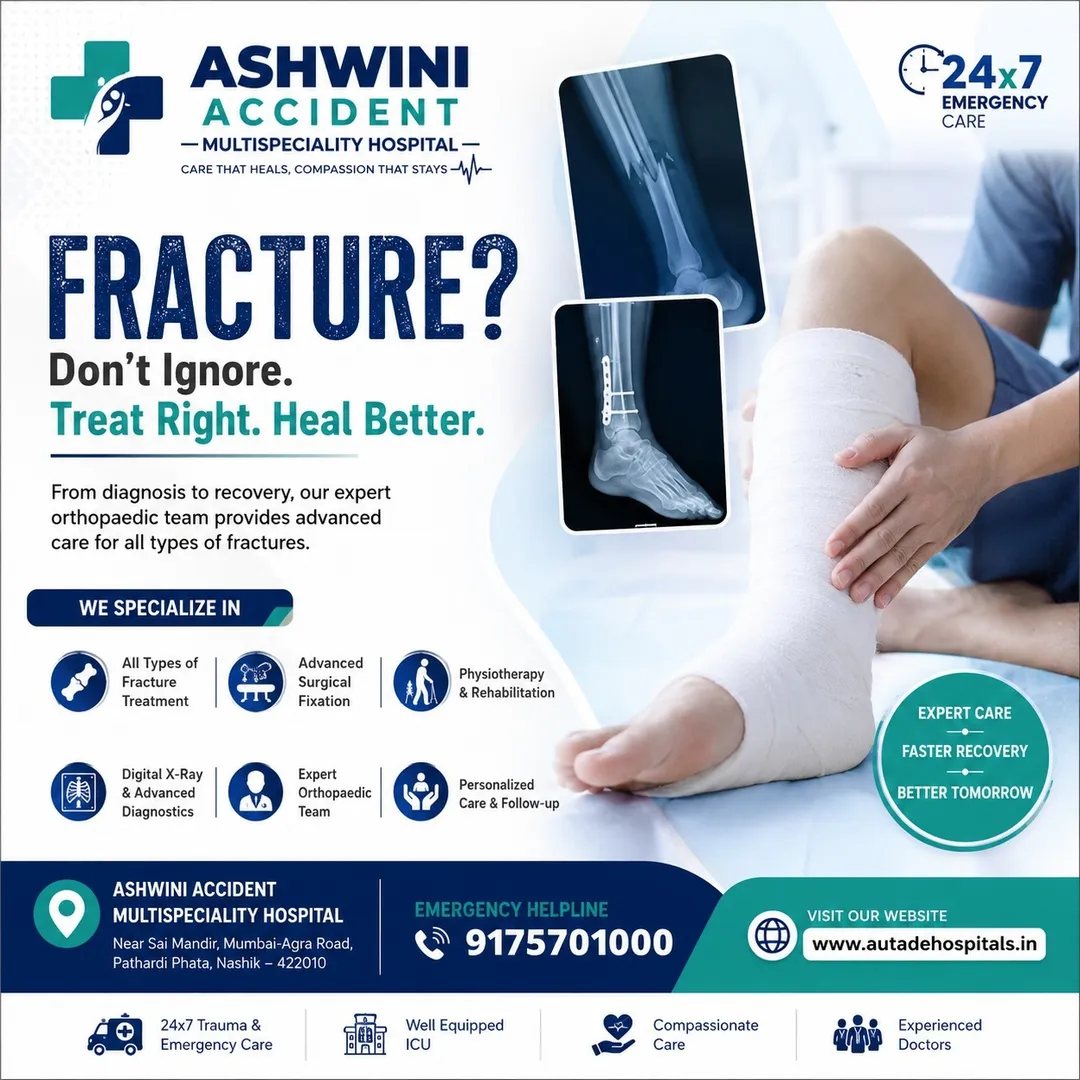
Ashwini Accident Multispeciality Hospital, Nashik
A fracture is a break or crack in a bone caused when excessive force is applied to it. Fractures commonly occur due to road accidents, falls, sports injuries, or weakened bones from conditions such as osteoporosis. Prompt diagnosis and treatment are essential to ensure proper healing and restore normal function.
What is a Fracture?
A fracture can range from a tiny crack in the bone to a complete break. Depending on the severity, fractures may be:
Closed Fracture: Bone is broken, but the skin remains intact.
Open (Compound) Fracture: Bone pierces the skin, increasing the risk of infection.
Hairline (Stress) Fracture: Small crack caused by repetitive stress.
Comminuted Fracture: Bone breaks into multiple fragments.
Greenstick Fracture: Common in children, where the bone bends and partially breaks.
Common Causes of Fractures
Road traffic accidents
Falls from height or slipping
Sports injuries
Direct impact or trauma
Osteoporosis (weak bones)
Repetitive stress on bones (stress fractures)
Symptoms of a Fracture
Seek immediate medical attention if you notice:
Severe pain at the injury site
Swelling and bruising
Difficulty or inability to move the affected limb
Deformity or abnormal shape
Bone visible through the skin (open fracture)
Difficulty bearing weight
Numbness or tingling in the affected area
First Aid for a Suspected Fracture
Do not move the injured limb unnecessarily.
Immobilize the affected area using a splint if possible.
Apply an ice pack wrapped in a cloth to reduce swelling.
Control bleeding with a clean dressing if there is an open wound.
Seek emergency medical care immediately.
Never attempt to straighten or push the bone back into place.
Diagnosis
At Ashwini Accident Multispeciality Hospital, Nashik, fractures are diagnosed using:
Clinical examination
Digital X-rays
CT Scan (for complex fractures)
MRI (if ligament or soft tissue injuries are suspected)
Treatment Options
Treatment depends on the type and severity of the fracture.
1. Conservative Treatment
POP (Plaster of Paris) Cast
Splints
Braces
Pain management
2. Surgical Treatment
Plate fixation
Intramedullary nailing
External fixator
Joint reconstruction for complex injuries
After treatment, physiotherapy and rehabilitation help restore strength, flexibility, and mobility.
Recovery Time
Healing varies depending on:
Patient's age
Type of fracture
Overall health
Bone involved
Most fractures heal within 6–12 weeks, while severe fractures may require longer rehabilitation.
How to Prevent Fractures
Wear helmets and protective gear while riding or playing sports.
Follow road safety rules.
Exercise regularly to strengthen bones and muscles.
Consume calcium and Vitamin D-rich foods.
Prevent falls, especially in elderly individuals.
Get osteoporosis evaluated and treated if at risk.
Why Choose Ashwini Accident Multispeciality Hospital, Nashik?
Our Orthopaedic and Trauma team provides:
24×7 Emergency Trauma Care
Advanced Digital X-ray & Diagnostic Services
Expert Fracture Management
Modern Orthopaedic Surgeries
Physiotherapy & Rehabilitation
Personalized Post-operative Care
Don't Ignore a Suspected Fracture
Early diagnosis and appropriate treatment help prevent complications such as improper healing, joint stiffness, and long-term disability. If you or your loved one experiences a bone injury, visit Ashwini Accident Multispeciality Hospital, Nashik for expert orthopaedic care
Keywords